
Views: 0 Author: Site Editor Publish Time: 2025-12-02 Origin: Site


Are you struggling with wear and corrosion in your manufacturing processes? Many industries face these challenges, resulting in high costs and reduced efficiency.
In this article, we will discuss how Fiber Laser Cladding Machines can optimize production quality. We’ll explore the technology, its benefits, and how it solves common production issues in aerospace, automotive, and chemical processing industries.By the end, you’ll understand how fiber laser cladding improves precision, reduces material waste, and enhances the durability of critical components.
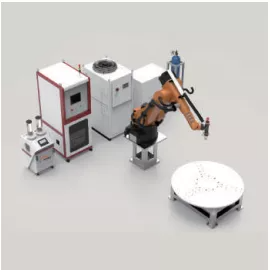
Fiber laser cladding involves using a focused laser beam to melt metal powder or wire and deposit it onto the surface of a material. The molten material fuses with the substrate, forming a durable, uniform cladding layer that enhances the properties of the base material. Unlike traditional methods, fiber laser cladding offers high precision, enabling manufacturers to apply cladding only where needed, minimizing material waste and reducing overall production costs.
In a typical process, the laser beam is directed at the substrate, which melts the powder or wire that is fed into the laser beam. The material solidifies as it cools, bonding to the surface in a dense, metallurgically bonded layer. This cladding process can be customized to suit the specific needs of different applications by adjusting the laser power, scanning speed, and material feed rate.
Precision: Fiber lasers allow for fine control over the cladding process, ensuring even deposition and minimal distortion, even for complex parts and geometries.
Reduced Material Waste: The controlled process ensures that only the required amount of material is used, reducing excess material and contributing to cost savings.
Minimal Heat Impact: The low heat input prevents thermal distortion, making it ideal for sensitive components that require high precision and minimal thermal impact.
Programmable fiber laser cladding systems offer enhanced flexibility compared to traditional methods. The ability to adjust key parameters such as laser power, scanning speed, and powder feed rate allows manufacturers to tailor the process to the specific requirements of each application. Whether the goal is to improve wear resistance, enhance corrosion protection, or restore parts to their original specifications, programmable control ensures that manufacturers can achieve the desired results with precision.
The programmable control also allows for repeatable, consistent results, ensuring high-quality production every time. A manufacturer can program the machine to handle complex geometries or target specific areas that require cladding, further enhancing the overall quality of the finished product. This adaptability makes fiber laser cladding a versatile and reliable solution across various industries.
One of the standout benefits of programmable fiber laser cladding is its ability to achieve uniform coatings with high precision. The laser beam can be finely controlled to apply material in a consistent manner, avoiding the issues of uneven coatings that are common with traditional methods like welding or thermal spraying. This precision ensures that each part meets the required specifications for performance, durability, and aesthetics.
For example, in aerospace applications, where components must withstand high temperatures and mechanical stress, fiber laser cladding offers a superior method to restore or enhance parts without compromising their structural integrity. The ability to selectively apply cladding to only the necessary areas ensures that high-stress regions receive the most protection without adding unnecessary weight or cost.
Traditional cladding methods often lead to material waste due to poor precision or excessive deposition. Programmable fiber laser cladding significantly reduces material consumption by depositing only the required amount of material onto the substrate. This precise control not only reduces waste but also cuts costs, making it an attractive option for industries looking to optimize their production processes.
In sectors like automotive manufacturing, where large quantities of parts need to be produced at scale, reducing material costs without sacrificing quality is essential. By utilizing fiber laser cladding, manufacturers can achieve high-performance coatings while keeping production costs in check. This efficiency can lead to significant savings, especially for companies dealing with expensive raw materials or complex part geometries.
Fiber laser cladding forms a strong metallurgical bond between the cladding material and the substrate, significantly improving the durability of parts. The resulting coatings can enhance wear resistance, corrosion resistance, and heat resistance, which is especially crucial for parts exposed to harsh operating conditions.
For example, in the mining industry, drill bits and other heavy-duty equipment are subject to extreme abrasion and wear. Fiber laser cladding can extend the lifespan of these components by forming a durable surface layer that resists wear and corrosion. This not only improves the operational efficiency of the equipment but also reduces the need for frequent maintenance or replacements, ultimately lowering downtime and costs.
| Benefit | Fiber Laser Cladding | Traditional Methods |
|---|---|---|
| Precision | High precision, minimal distortion | Less control, more risk of defects |
| Material Efficiency | Reduced material waste, cost-effective | Higher material consumption |
| Durability | Enhanced wear, corrosion, and heat resistance | Less durable coatings |
| Customization | Programmable control for optimal results | Limited customization and flexibility |
| Automation | Fully automated, reduces labor costs | Requires more manual intervention |
In the aerospace industry, components like turbine blades, engine parts, and nozzles face extreme wear and corrosion due to high-pressure environments and constant use. Fiber laser cladding has become a crucial technology for repairing and enhancing these components, restoring their original dimensions and improving their resistance to wear, fatigue, and corrosion.
For example, turbine blades, which are critical to engine performance, can be repaired using fiber laser cladding without the need for full replacement. This not only reduces costs but also helps maintain the high performance and safety standards required in aerospace manufacturing. The ability to restore and enhance these components helps extend the operational life of expensive aerospace parts, reducing the need for costly replacements.
Automotive components like camshafts, connecting rods, and brake discs undergo significant mechanical stress and exposure to high temperatures. Fiber laser cladding can be used to reinforce these components, improving their wear resistance, fatigue strength, and corrosion resistance.
The precision offered by programmable fiber laser cladding also allows for selective treatment of high-stress areas, reducing material waste and ensuring that only the necessary parts are coated. This targeted approach helps lower production costs while enhancing the overall performance and longevity of automotive components. Additionally, by extending the service life of these parts, manufacturers can reduce maintenance costs for end-users.
In chemical processing industries, parts such as valves, pipes, and pump casings are regularly exposed to corrosive substances and extreme temperatures. Fiber laser cladding can significantly improve the resistance of these components to chemical wear and corrosion, extending their operational life and reducing the need for frequent maintenance or replacement.
This is especially important in industries like petrochemicals, where the failure of critical equipment can lead to costly downtime and safety risks. Fiber laser cladding helps prevent such failures by providing an extra layer of protection, enhancing the durability of equipment in corrosive and extreme environments.
The quality of fiber laser cladding is directly impacted by several key process parameters. These include:
| Parameter | Effect on Cladding Quality |
|---|---|
| Laser Power | Affects penetration depth and strength of the bond |
| Scanning Speed | Impacts layer thickness and uniformity |
| Powder Flow Rate | Ensures even material deposition for consistent coatings |
| Beam Focus | Affects precision and minimal distortion |
| Cooling Rate | Controls thermal stress and material hardness |
By adjusting these parameters, manufacturers can fine-tune the cladding process to achieve the desired coating properties, ensuring that each part meets quality and performance standards. Fine control over these parameters allows for customization of the cladding layer, ensuring that it is optimized for the specific application.
Modern programmable fiber laser cladding machines are often equipped with automated systems that enhance both consistency and efficiency. Automated systems can adjust process parameters in real-time, monitor the quality of the cladding, and make necessary corrections during the operation. This reduces the likelihood of human error, ensures repeatable results, and increases production throughput.
Automation also streamlines the entire manufacturing process, from initial cladding to post-process inspection, making it easier to scale operations without sacrificing quality. The ability to automate the process reduces labor costs and ensures that each part is treated with precision.
While fiber laser cladding offers numerous advantages, challenges such as material compatibility, distortion, and uneven powder deposition can arise. Programmable controls and advanced monitoring systems can help mitigate these issues by continuously adjusting process parameters and ensuring optimal conditions throughout the operation.
For instance, advances in precision beam focusing and intelligent powder feeding systems have made it easier to apply fiber laser cladding to complex geometries without distorting the underlying material.
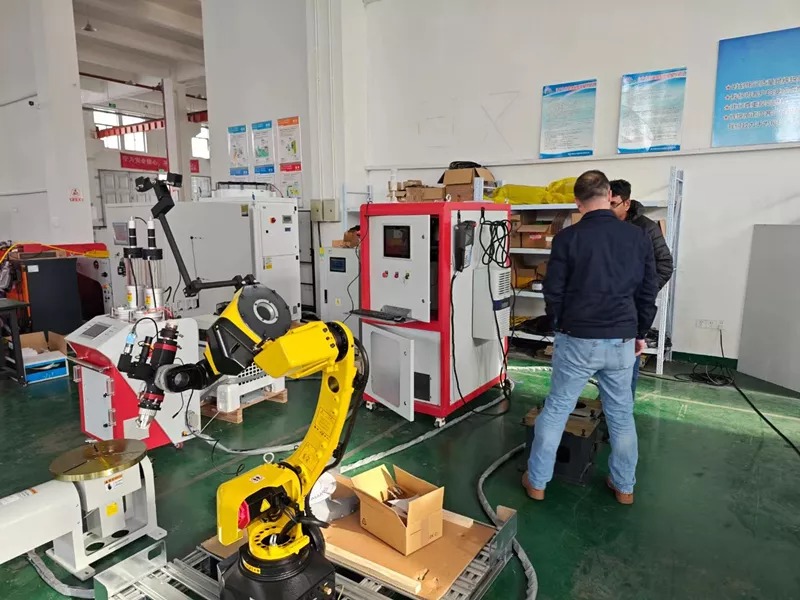
Compared to traditional cladding methods like welding and thermal spraying, programmable fiber laser cladding offers superior precision. The high precision of the fiber laser beam minimizes distortion, allowing for selective cladding of only the necessary areas. This results in smoother coatings with better performance characteristics.
In contrast, welding and thermal spraying often involve more heat input, which can lead to significant distortion, warping, and material waste. Fiber laser cladding offers a more efficient and cost-effective solution.
One of the major advantages of fiber laser cladding is its low heat input. Traditional methods like arc welding or thermal spraying can introduce excessive heat, which may warp the substrate and reduce the quality of the coating. Fiber laser cladding, on the other hand, applies heat only to the specific area being cladded, minimizing the risk of distortion.
This makes fiber laser cladding ideal for sensitive components that require high precision and minimal thermal impact. It ensures that the base material retains its strength and integrity, even after the cladding process.
| Feature | Fiber Laser Cladding | Traditional Methods |
|---|---|---|
| Heat Impact | Low heat input, minimal distortion | High heat input, risk of warping |
| Coating Precision | Very high, minimal deviation | Moderate precision, risk of uneven coating |
| Material Waste | Low, material is used efficiently | High, excess material often used |
| Suitability | Best for complex parts, high-performance | Suitable for larger, less complex parts |
As laser technology continues to advance, fiber laser cladding machines are becoming more powerful and efficient. Improvements in laser power, beam quality, and control systems will lead to even higher precision and faster processing times. These advancements will further enhance the capabilities of fiber laser cladding, making it applicable to a broader range of industries.
The versatility of fiber laser cladding, particularly its ability to work with various materials like metals, alloys, and ceramics, will see it expand into new markets. Industries such as medical device manufacturing, where biocompatibility and durability are crucial, will benefit from the precision and customization options provided by fiber laser cladding.
Programmable fiber laser cladding technology is a game-changer for industries facing production challenges like material waste, high costs, and durability issues. By enhancing precision and reducing waste, it improves the overall performance of critical components. As manufacturers strive for greater efficiency, adopting this technology will offer a competitive advantage in today’s demanding market.
Jinan Pioneer CNC Technology Co., Ltd. provides innovative fiber laser cladding solutions that help businesses optimize production processes. Their advanced products deliver unmatched value in precision and cost savings, ensuring long-lasting performance for various industrial applications.
A: A Fiber Laser Cladding Machine uses a high-powered laser beam to melt metal powder or wire, which is then deposited onto a substrate to create a durable, uniform surface. This process improves wear resistance and corrosion protection.
A: Fiber laser cladding enhances production quality by providing precise material deposition, reducing waste, and improving the durability of critical components. It ensures consistent and uniform coatings with minimal distortion.
A: Programmable control in fiber laser cladding allows for fine-tuned adjustments in laser power, scanning speed, and powder flow, ensuring optimal results for various industrial applications.
A: The main advantages include high precision, reduced material waste, improved durability, and the ability to customize coatings for different applications, all of which contribute to higher quality production.
A: Fiber laser cladding offers higher precision, minimal heat input, and less material waste compared to traditional methods like welding, which can cause distortion and excessive heat.


